

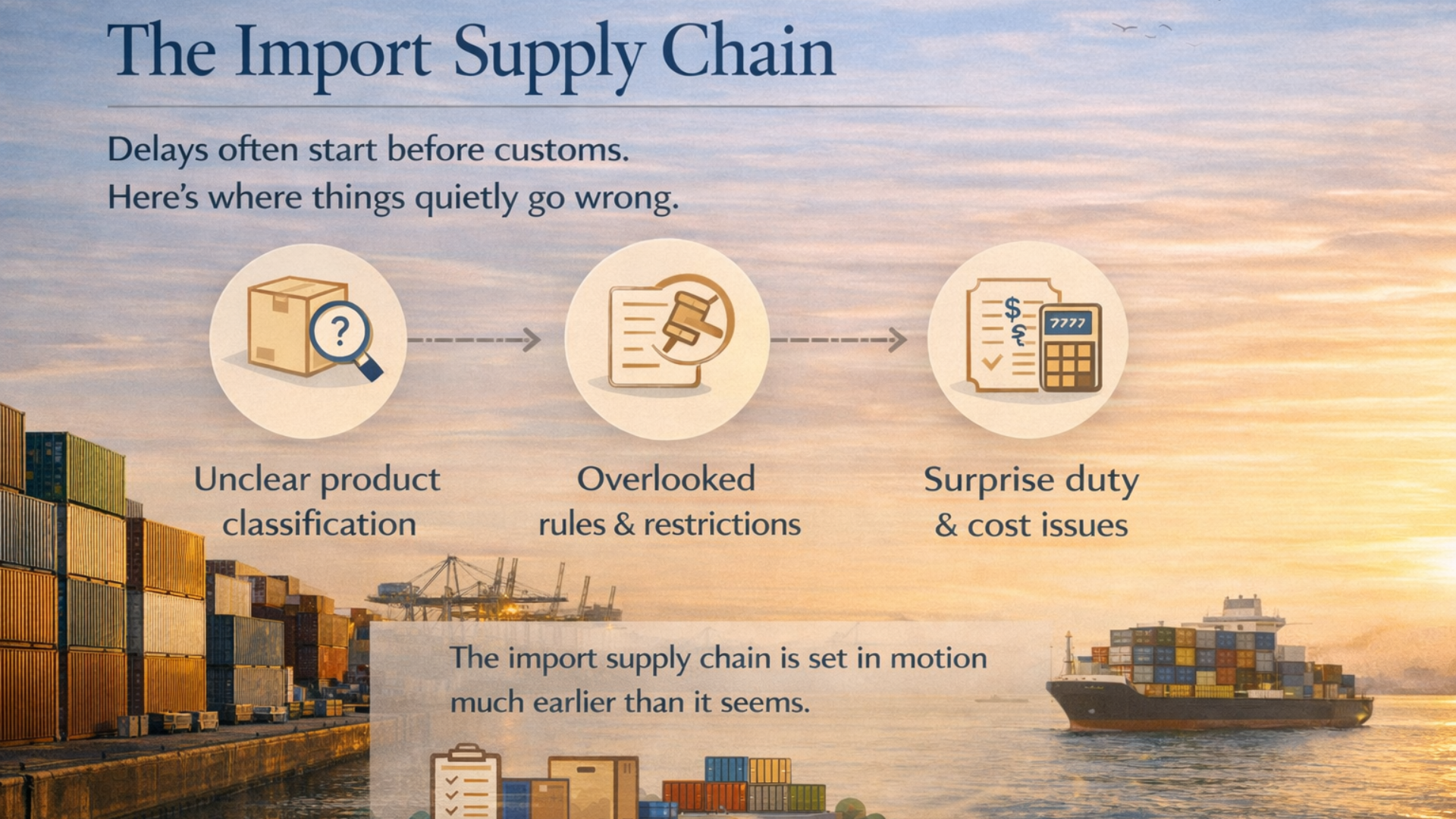
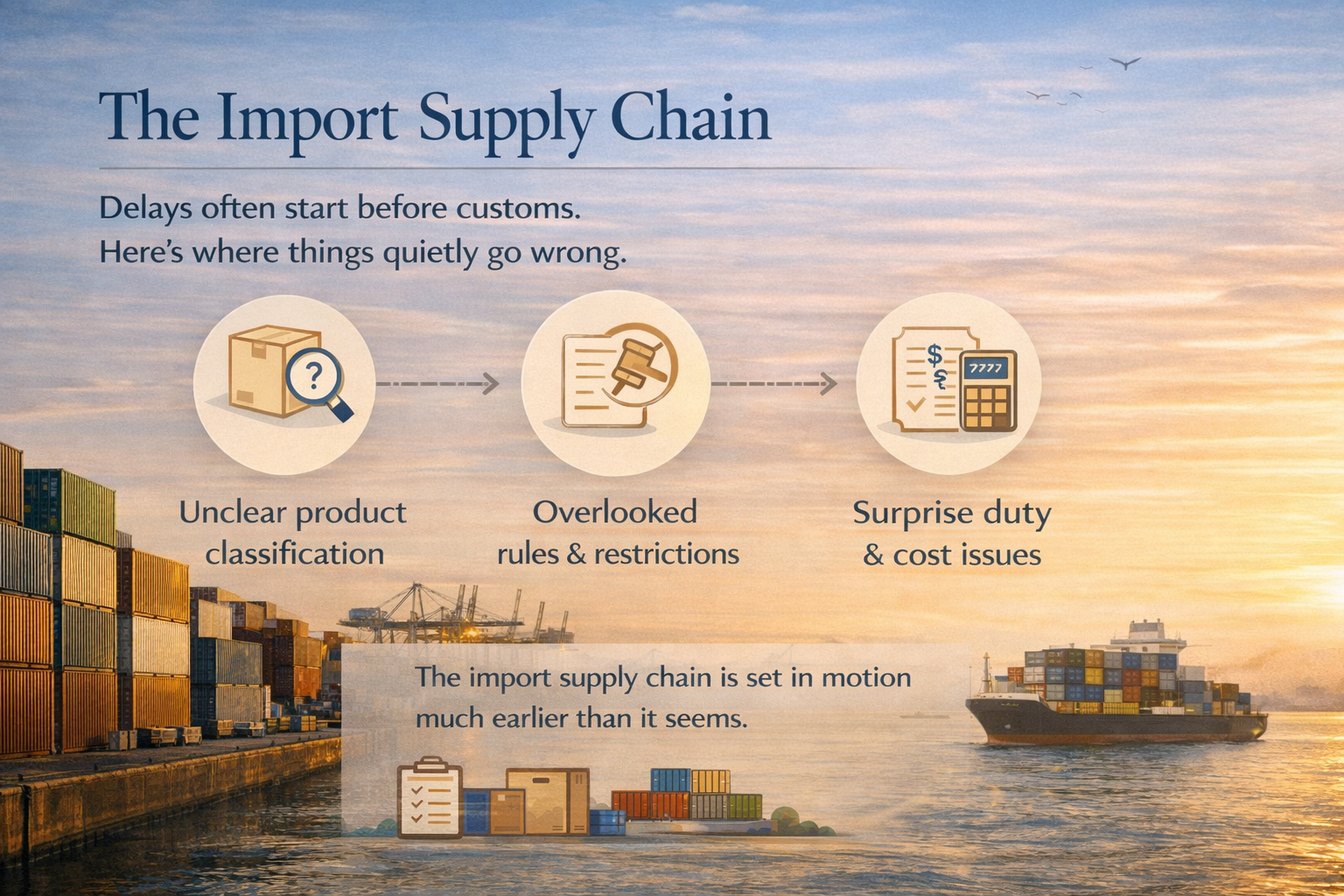
When import shipments get delayed, customs is often blamed.
But experienced importers know that by the time goods reach the port, the outcome is already decided.
Customs delays are rarely sudden.
They are usually the result of small decisions taken much earlier—often without realizing their long-term impact.
Is the Product Really Understood the Way Customs Sees It?
Most importers believe they know their product well.
But customs does not see products the way businesses do.
Even a slight difference in how a product is understood—its composition, function, or use—can quietly change how it is treated during clearance.
These differences usually surface only when it’s too late to make easy corrections.
Was the import policy ever checked beyond “It’s allowed”?
Many delays begin with assumptions.
A product may appear freely importable, yet still fall under conditions that are not immediately obvious.
When these nuances are missed early, the shipment moves forward smoothly—until it suddenly doesn’t.
Were Compliance Requirements Too Easily Overlooked?
Some compliances feel optional—until they aren’t.
Certain approvals cannot be arranged after the goods arrive, no matter how urgent the situation becomes.
This is often discovered at the port, when options are limited, and timelines are already slipping.
Was the landed cost truly understood or just estimated?
Import costs often look manageable on paper.
But when duty structures, valuation factors, or tax applicability are not examined deeply, surprises tend to appear at clearance.
These surprises don’t just affect cost—they slow down decisions and delay movement.
Were shipping decisions taken with clearance in mind?
Freight is often planned around timelines and rates.
Clearance readiness is considered later.
When shipping and compliance don’t move together, documents start telling different stories—and customs notices that immediately.
Were Documents Reviewed as Carefully as the Shipment Was Planned?
Invoices and packing lists are treated as routine paperwork.
But customs reads them very closely.
Small inconsistencies that seem harmless during preparation often become the biggest reason for scrutiny later.
Was Anyone Thinking About Clearance Before the Shipment Arrived?
Many import processes only become active once the goods land.
By then, coordination becomes reactive.
When clearance planning starts early, delays are rare.
When it starts late, delays become part of the process.
Why Does It Always Feel Like Customs Is the Problem?
Customs is where everything comes together.
So it feels like the problem starts there.
In reality, customs only highlights issues that were already built into the shipment long before arrival.
Conclusion
Import delays rarely begin at customs.
They begin with decisions that felt small at the time.
The earlier those decisions are examined, the fewer problems appear later.

