

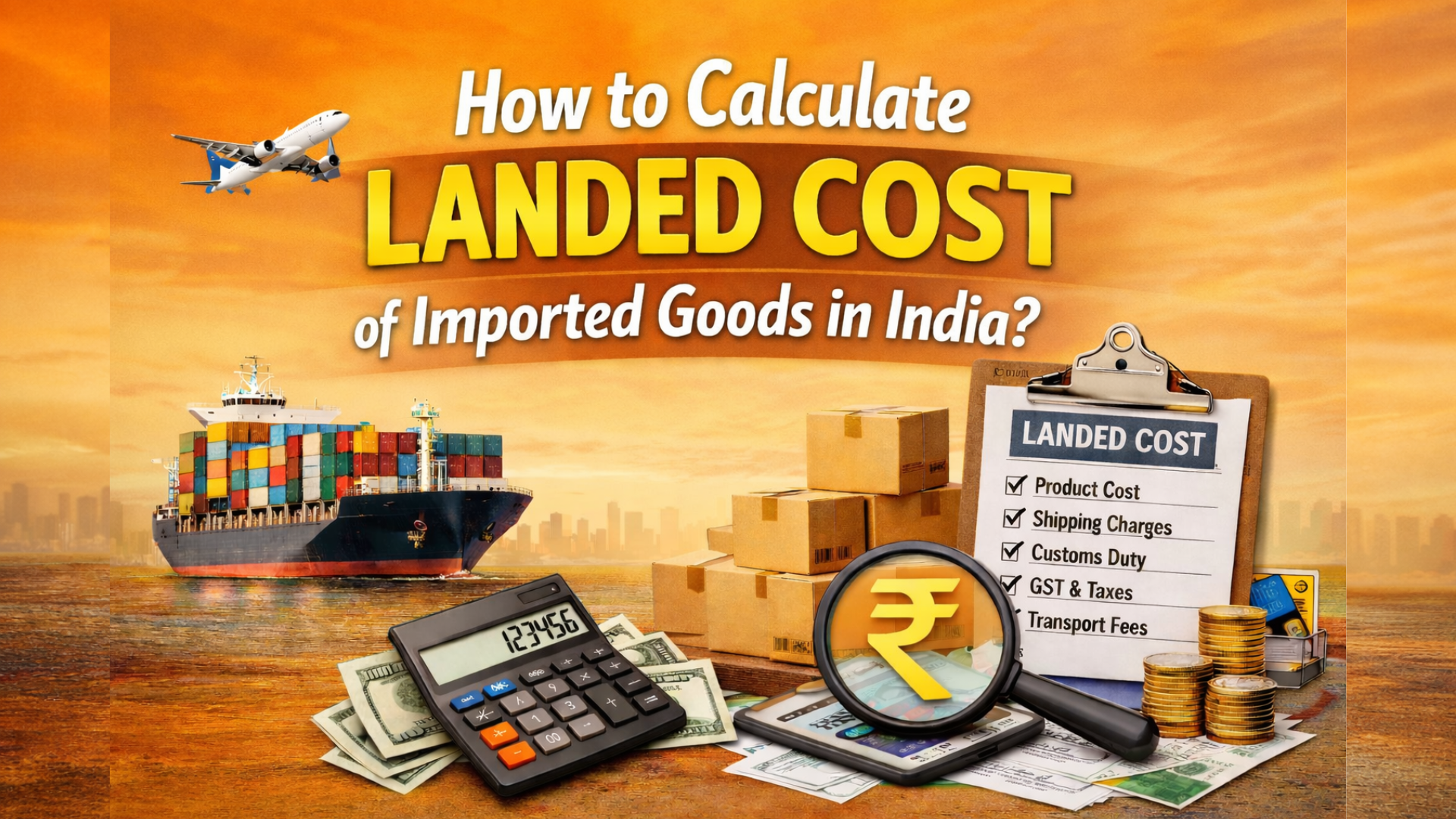
When importing products into India, the purchase price of the goods is only one part of the total cost. Importers must consider several additional expenses such as shipping charges, customs duties, taxes, and logistics costs.
The total amount paid to bring goods from a foreign supplier to the final warehouse is known as the landed cost. Understanding landed cost is essential for pricing products correctly and maintaining profitability.
What Is Landed Cost?
Landed cost refers to the total cost of importing a product until it reaches the importer’s warehouse.
It includes:
-
Product purchase price
-
Freight charges
-
Insurance
-
Customs duty
-
GST
-
Port handling charges
-
Customs clearance charges
-
Inland transportation
Calculating landed cost helps importers determine the real profit margin.
Key Components of Landed Cost
1. Product Cost
This is the price paid to the overseas supplier for the goods. It is usually mentioned in the commercial invoice.
2. Freight Charges
Freight is the cost of transporting goods from the supplier’s country to the destination port. Freight costs depend on:
-
Shipping method (sea freight or air freight)
-
Container size
-
Distance between ports
3. Insurance
Insurance protects the shipment against damage, theft, or loss during transit. Many importers purchase marine cargo insurance to reduce financial risk.
4. Customs Duty
Customs duty is a tax imposed on imported goods. The duty amount depends on the product classification under the HS code.
Import duties are regulated by the Central Board of Indirect Taxes and Customs.
5. GST on Imports
Imported goods are also subject to GST in India. The GST rate depends on the product category and is calculated after adding customs duty to the assessable value.
6. Port and Handling Charges
Ports charge fees for handling containers, unloading cargo, and storing goods. These charges may include:
-
Terminal handling charges
-
Port handling charges
-
Documentation fees
7. Customs Clearance Charges
Importers usually hire customs brokers or clearing agents to handle the clearance process. Their service fees are also part of the landed cost.
8. Inland Transportation
Once the shipment is cleared, goods must be transported from the port to the warehouse. Trucking or rail transportation costs should also be included in the final calculation.
Why Calculating Landed Cost Is Important
Understanding landed cost helps importers:
-
Determine the correct selling price
-
Avoid unexpected expenses
-
Improve profit margins
-
Compare suppliers more accurately
Without calculating landed cost, importers may underestimate expenses and reduce profitability.
Conclusion
Landed cost is one of the most important calculations in international trade. It includes not only the product price but also shipping costs, customs duties, taxes, and logistics expenses.
By carefully calculating the landed cost before importing goods, businesses can make better financial decisions and manage their supply chain more effectively.

