

Introduction
Importing goods into India can be profitable, but many businesses face delays simply because their documentation is not in order.
In most cases, shipments don’t get stuck due to products — they get stuck because of missing or incorrect documents.
This guide will help you understand what you actually need before importing.
What is Supply Chain in Import?
In simple terms, the supply chain in import means the journey of goods from the supplier (another country) to your warehouse in India.
It includes:
Supplier → Shipping → Customs → Delivery
Documentation plays a key role at every step, especially during customs clearance.
Objectives of Proper Documentation
- Ensure smooth customs clearance
- Avoid delays and extra charges
- Comply with Indian import laws
- Reduce risk of penalties or shipment hold
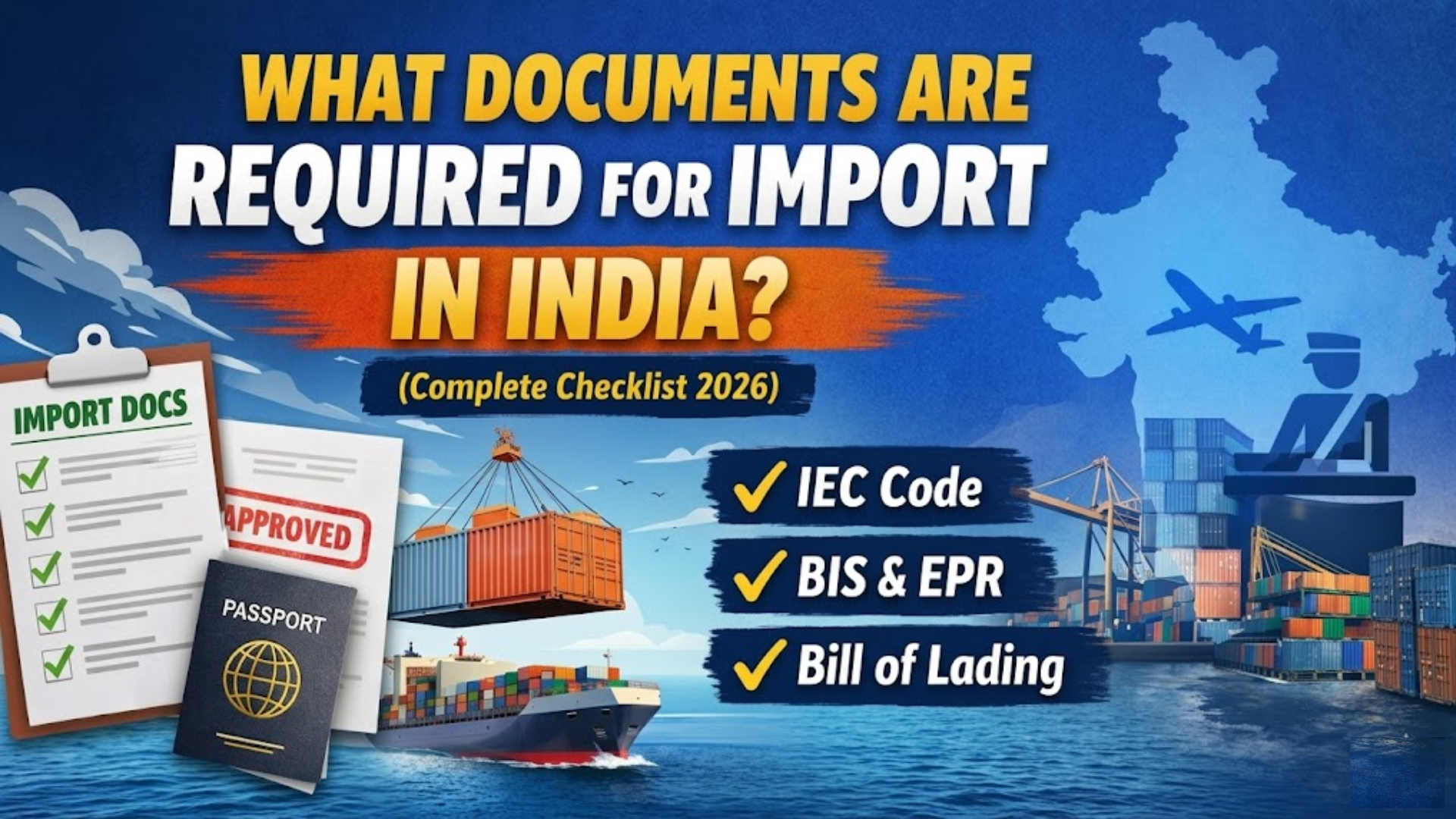
Documents Required for Import in India
Here are the basic documents:
- IEC (Import Export Code) – Mandatory to start import
- Commercial Invoice – Product and pricing details
- Bill of Lading / Airway Bill – Proof of shipment
- Bill of Entry – Filed for customs clearance
- AD Code – Bank-linked code for clearance
- BIS Certification – For electronics, toys, etc.
- EPR Registration – For plastic, battery, e-waste
- LMPC Registration – For packaged goods
Who Can Apply for Import?
- Any individual can also apply for import in India, but only under certain conditions.
If the import is for personal use (not for resale), an individual can import goods using their own IEC.
However, for commercial importing (selling products in the market), it is generally recommended to operate through a business entity like a proprietorship, partnership, or company.
- Proprietorship firms
- Partnership firms
- Companies (Private Limited, LLP, etc.)
Anyone with a valid IEC can start importing.
Eligibility
To start importing in India, a person or business must have certain basic requirements in place. The most important is a valid IEC (Import Export Code), which acts as the official permission to import goods. Along with this, a PAN card is required, which should be linked to the individual or business carrying out the import.
An active bank account in the name of the business is also necessary, as all transactions related to imports are handled through this account. In addition to these basic requirements, certain registrations like GST, BIS, EPR, or LMPC may be required depending on the type of product being imported. Once these essentials are in place, you are eligible to import goods into India.
Validity
The IEC (Import Export Code) is issued for a lifetime, which means there is no need for renewal. However, it is important to keep the details updated whenever there are any changes in business information.
On the other hand, compliance-related registrations such as BIS, EPR, and LMPC are not permanent. These are issued for a specific period and must be renewed from time to time. If these registrations expire, it can lead to delays in customs clearance or even restrictions on importing certain products.
Benefits
- Faster customs clearance without delays
- Avoidance of extra charges like demurrage and detention
- Reduced risk of penalties or shipment seizure
- Smooth and hassle-free import process
- Better compliance with Indian regulations
- Improved planning and cost control
- Builds trust with customs and authorities
- Saves time and prevents business disruptions
Conclusion
Importing is not as complicated as it may seem, but it requires attention to detail — especially when it comes to documentation. Even a small mistake or missing document can lead to delays, extra expenses, and unnecessary stress.
If you understand the requirements and prepare everything in advance, the process becomes much easier and smoother. It allows you to focus on growing your business instead of dealing with avoidable issues.
Taking the time to get your documentation right — or seeking expert guidance when needed — can save you from major problems later and ensure your imports are handled efficiently.

